



 Request
 05/17/2026
Today, looking at the endless green slopes of the Carpathians, it is hard to believe that it was not always this way. Centuries ago, these mountains looked completely different. The true story of the mass appearance of spruce (known locally as Smereka) in our region is connected not with myths, but with the precise economic calculations of European engineers and foresters of the past.
The Austro-Hungarian Reform: A New Era for the Carpathians
Until the late 18th and early 19th centuries, most of the Carpathians were covered with dense, mixed primeval forests dominated by beech and silver fir. Spruce, of course, grew in the mountains, but it occupied mostly the highest, harshest ridges.
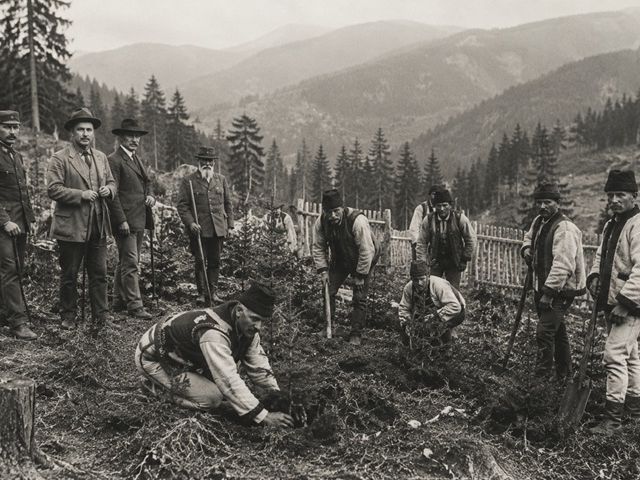
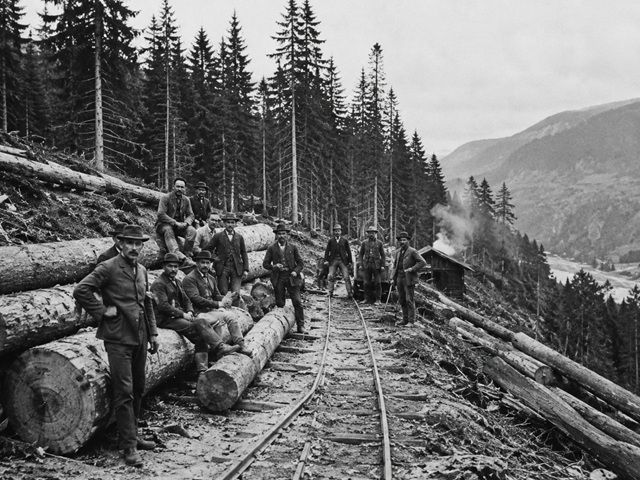
Everything changed when the Carpathians became part of the Austro-Hungarian Empire. Europe, which was developing rapidly by building railways, mines, and cities, desperately lacked high-quality construction timber. Beech was not suitable for large-scale construction due to its physical properties, so imperial foresters turned their attention to the European spruce (Picea abies).
A massive state decision was made: to begin systematic, large-scale artificial planting of spruce throughout the Carpathian region.
Why Did Hungarian and Austrian Engineers Choose Spruce?
The choice of imperial experts was purely pragmatic and based on three main factors:
-
Fast Growth and Straight Trunk: Spruce grew much faster than beech and provided an ideal, straight log that was easy to process and transport.
-
Versatility in Construction: This wood proved to be an ideal structural material — lightweight, yet capable of withholding colossal loads.
-
Economic Benefit: Spruce saplings rooted perfectly on cleared areas, forming dense, pure forest stands that were convenient for industrial management.
Thanks to that imperial forestry reform, the landscape of the Carpathians changed, and spruce became the rightful "queen" of these mountains.
A Century of Experience in Modern Walls
The forests planted by generations of foresters during the Austro-Hungarian era have now become the foundation for modern premium-class wooden construction.
At LesCo, we work with material that has a clear history of selection and cultivation culture. The spruce planted in the high altitudes of the Carpathians has adapted to local conditions over more than a century, forming a fine-layered, dense structure with narrow annual rings. Those engineering standards laid down by Europeans centuries ago are what we transform today into reliable, high-tech glulam beams.
Conclusion
Carpathian spruce is a timber with a European success story. Emerging as a result of a well-thought-out forestry strategy of Austria-Hungary, it became not just a symbol of the Carpathians, but the best technical solution for creating strong, durable, and eco-friendly homes.